
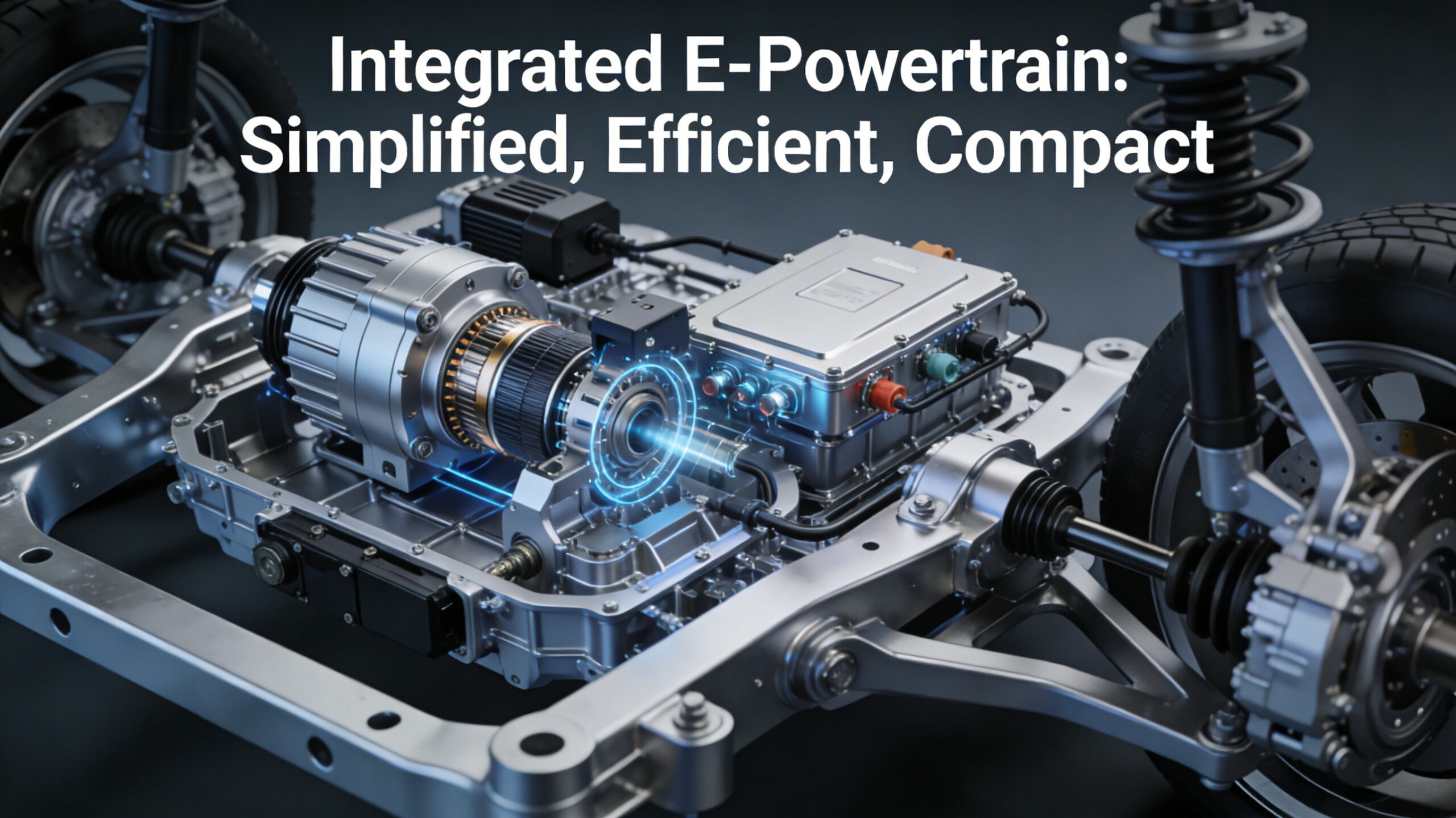
As electric vehicles mature, the industry is gradually shifting toward more integrated and higher-voltage vehicle architectures.
Two trends stand out in 2026:
the adoption of 800-volt electrical systems and the increasing integration of electric powertrain components.
Why 800-Volt Architectures Matter
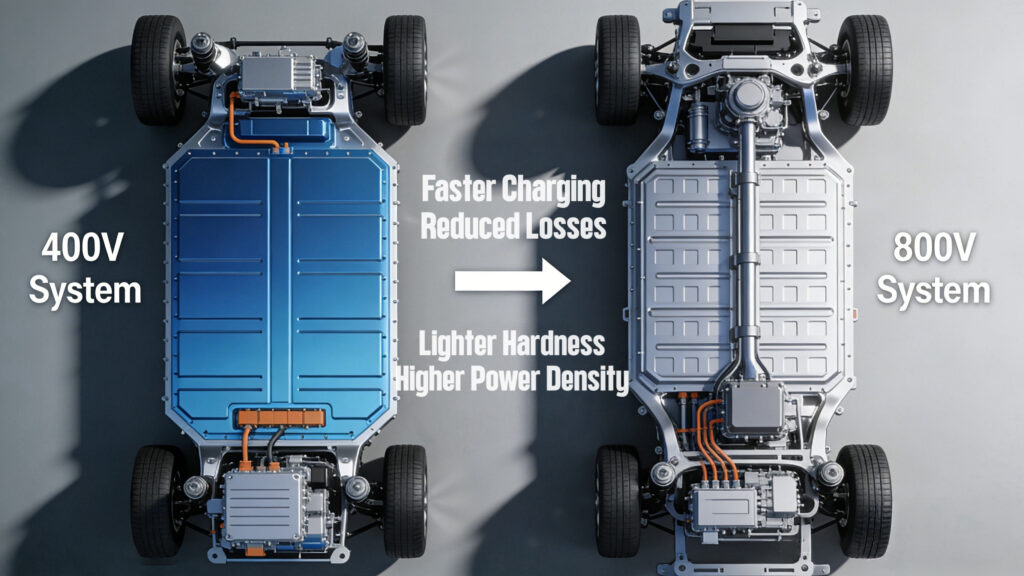
Traditional EV platforms operate at 400 volts, which has been sufficient for most early electric vehicles. However, higher-performance models are increasingly moving toward 800-volt architectures.
Higher voltage systems offer several advantages:
faster charging capability
reduced electrical losses
lighter wiring harnesses
improved power density
Despite these benefits, industry experts believe 400-volt systems will remain dominant in many mainstream vehicles due to cost considerations, particularly in price-sensitive markets.
As a result, both architectures will likely coexist for many years.
The Rise of Integrated E-Powertrain Systems
Another major trend is the integration of multiple powertrain components into single compact systems.
Modern EV drive units may combine:
electric motor
motor controller (inverter)
gearbox
onboard charger (OBC)
DC-DC converter
power distribution unit (PDU)
This type of integrated e-drive architecture reduces system complexity while improving efficiency and packaging.
By integrating multiple subsystems into a single module, manufacturers can achieve:
lower vehicle weight
reduced wiring complexity
simplified vehicle assembly
improved thermal management
System Integration Becomes a Competitive Advantage
As EV technology matures, competition is shifting from individual components toward complete system integration.
Suppliers capable of providing battery systems, power electronics, thermal management, and electric drive systems as coordinated subsystems are increasingly valuable to OEM vehicle programs.
Integrated architectures also enable greater scalability across vehicle platforms, allowing manufacturers to develop multiple models using shared technology foundations.